Energy Minister Rallies Stakeholders to Revive Petroleum Investment
Jinapor targets upstream growth, pushes 24-hour economy across energy sector

Nelson Emmanuel
April 6, 2026 • 2 min read

AI Smart Brief
Get a quick 3-point summary of this article powered by Gemini.

The Meeting
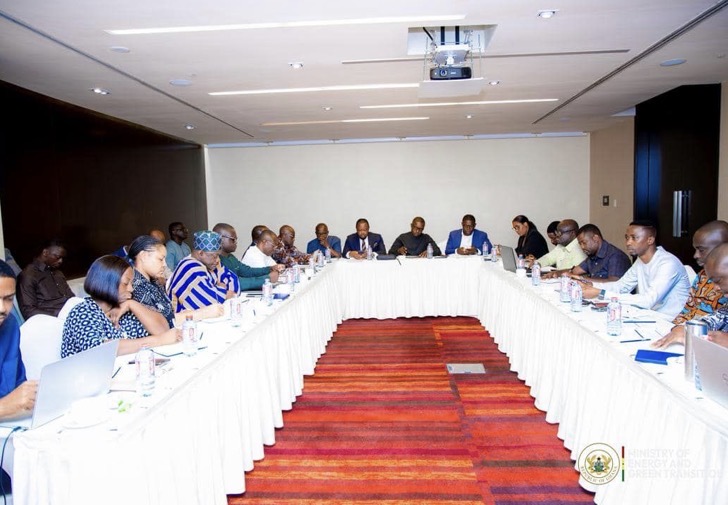
The Minister of Energy and Green Transition, John Abdulai Jinapor, has convened a high-level meeting with key players in Ghana’s upstream petroleum industry to drive investment and strengthen the sector.
The strategic engagement brought together major institutions, including the Ghana National Petroleum Corporation (GNPC), the Petroleum Commission, the Office of the Attorney-General, and the Ministry of Finance.
Dr. Jinapor described the discussions as insightful and forward-looking, centred on strengthening Ghana’s upstream petroleum sector, improving the fiscal and regulatory framework, and ensuring sustainable industry growth.
A major focus of the meeting was attracting critical investment to reverse declining petroleum reserves by boosting exploration and production activities.
“I am confident that the outcomes of this engagement will translate into impactful actions as we continue to build a more resilient and progressive upstream petroleum landscape,” he stated after the meeting.
On the downstream front, the Minister has also directed all agencies under his ministry to submit detailed concept notes outlining how they will implement the government’s 24-hour economy policy within their operations.
This was disclosed by Deputy Minister Richard Gyan-Mensah in Accra during the signing of a memorandum of understanding between the National Petroleum Authority and the 24 Hour Economy Secretariat.
According to him, all agencies have been formally notified to submit their proposals, with those yet to receive official communication expected to do so soon.
Mr. Gyan-Mensah emphasised that the 24-hour economy is a continuous process rather than a one-time initiative, noting that it holds the potential to expand productivity beyond traditional working hours.
“The Ministry of Energy and Green Transition, like every other ministry, has a role to play. The 24-hour economy will enable us to remain economically active and productive beyond the usual working schedule,” he said.
The move signals strong government commitment to both revitalising the petroleum sector and advancing broader economic transformation through extended productivity hours.
Comments (0)
No comments yet. Be the first to share your thoughts!